

The pokie isn’t just a game for us Aussies; it’s a neon-lit monument that’s been anchored to the corner of the local for more than a century. Today, when we spin reels on our smartphones and cash out instantly viaPayID, it’s easy to forget that a trillion-dollar industry began with heavy iron-geared machines and cast-iron symbols in a post-World War 2 world.
The Birth of a Legend: From the 1891 “Five-Drum” to Charles Fey’s Liberty Bell
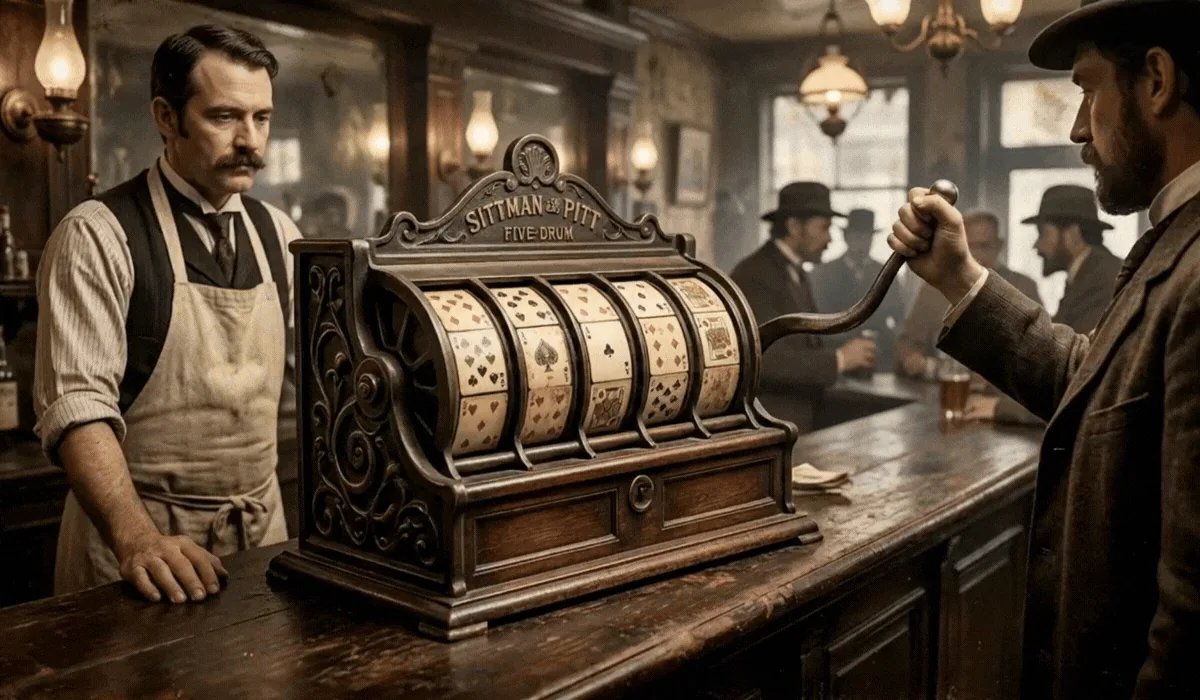
In 1891, Sittman and Pitt showed off the first “five-drum” poker machine in New York – featuring five rotating reels holding 50 playing card faces to mimic a poker hand. But the true ancestor of modern-day pokies isCharles Fey’s Liberty Bell.
Unveiled in 1895 in San Francisco, the world’s first slot machine was genius and simple. Based on poker maths, the five-drum had 2.6 million winning hand combinations, making it impossible to build a machine that could both detect combinations and pay out. Fey realized that for a machine to pay on its own, the math had to be simplified because Sittman and Pitt’s machine couldn’t calculate wins and required a human to verify the hand.
Why the 3-Reel Design Revolutionized Automated Payouts
He replaced the drums with three reels and reduced the card faces to just five symbols – Hearts, Diamonds, Spades, Horseshoes, and the Liberty Bell, also adding a mechanical slide that dispensed actual coins when three symbols on a reel matched. This reduced the possible outcomes to a manageable 1,000 combinations. Charles Fey Liberty Bell first automatic jackpot paid out 10 nickels (50 cents) – a remarkable feat for the time.
The Sydney Underground: How “One-Arm Bandits” Survived a 50-Year Legal Gray Area
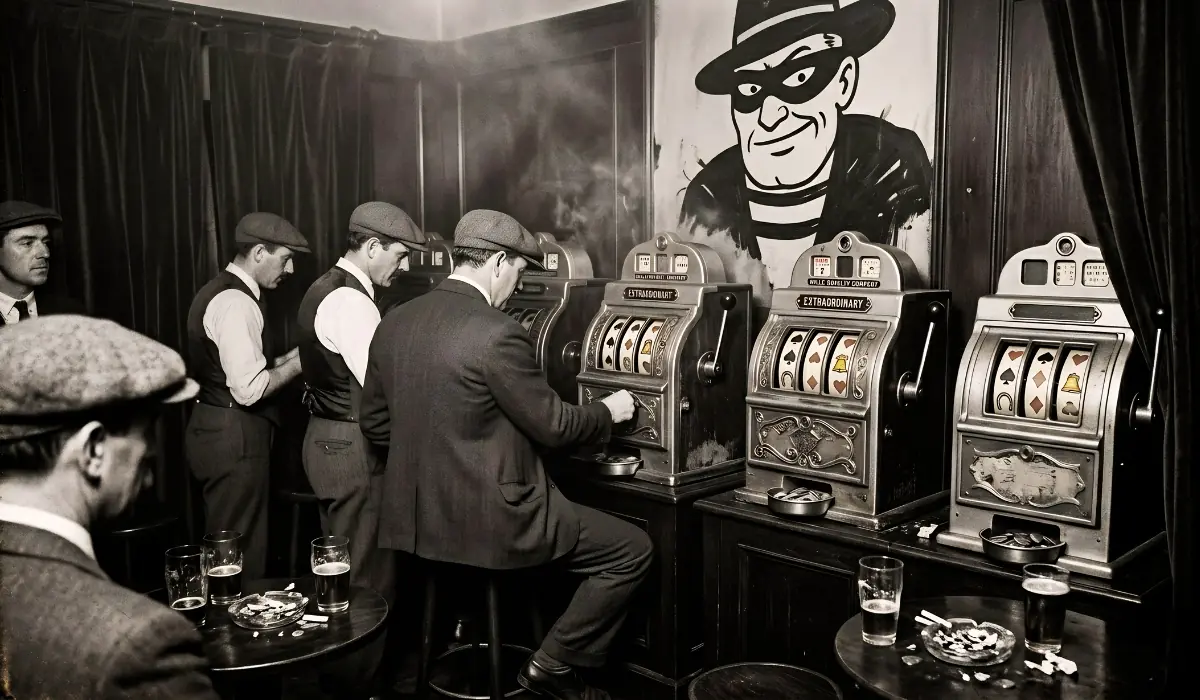
Charles Fey Liberty Bell cabinets were imported to the first poker machines Sydney clubs in the early 1900s. However, Fey never patented his invention due to gambling bans in the U.S., allowing rivals to copy his design and flood the market without facing IP issues. To understand how pokies evolved into today’s digital platforms, it’s important to explore the current legal status of online pokies in Australia.
While the Liberty Bell and its successors were technically illegal Down Under, they remained in a legal gray area for over 50 years. Police and local councils often turned a blind eye as long as the machines stayed inside private clubs and the backrooms of pubs.
Before we dive deeper into the history of Australian pokies and the evolution of online pokies 2026, here is a quick fact: “Pokie” is an Australian shorthand for “poker machine”. While we call them pokies, they are known around the world by different names – such as slots,fruit machines, or one-arm bandits.
That word has survived every technological transition in casino history – from the clunky mechanical gears of the five-drum machines to cryptographically-secured, cloud-based Random Number Generators (RNGs) of digital pokies.
To you, they’re all pokies.
1956: The “Big Bang” That Legalized Pokies In New South Wales
The most important date in Australian punting history is August 22, 1956. On that day, the government of New South Wales (NSW) legalized pokies via the Gaming and Betting (Poker Machines) Act. Until then, clubs across the country were running pokies illegally and were only tolerated due to weak enforcement.
A crumbling post-World War 2 economy and desperate need for public funds led to then-State Premier Joe Cahill’s government legalizing pokies in non-profit clubs and funneling casino license fees to hospitals and other public amenities – framing it as a social benefit program to override opposition from the church and hotels.
Len Ainsworth And The Aristocrat Clubmaster: The World’s First Fully Automatic Slot
Len Ainsworth – founder of the Australian casino gaming giant Aristocrat Leisure Limited – was perfectly positioned to maximize this legislative shift. That same year, he released the Clubmaster – the world’s first fully automatic slot machine with multiline play and automated payouts via electromechanics.
The Aristocrat Clubmaster 1956 rewrote the history of Australian pokies because it didn’t need human assistance. This was the real debut of digital pokie technology Australia.
How Pokie Revenue Built The Modern Australian RSL And Bowling Club
The Clubmaster played a pivotal role in turning the local RSL into the beating heart of Australia’s social fabric. This machine could effortlessly handle the craziness of an RSL on a Saturday night.
It went on to become the primary revenue engine for the government to support community growth, funding massive RSL expansions, bowling club upgrades, and community sports sponsorships throughout the 1960s and 70s.
From Gears To Glass: The Microprocessor Revolution Of The 1980s
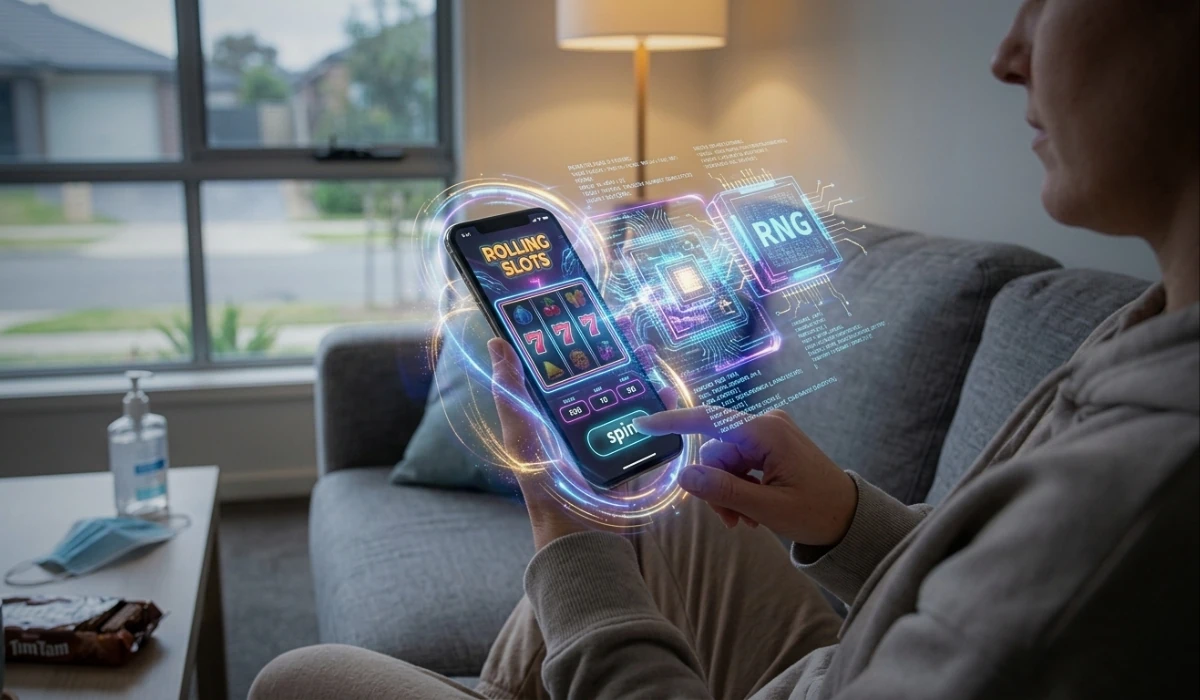
By the 1980s, the clunky mechanical reels were being replaced by the electronic hum of video poker machines (VPMs). Microchip technology enabled VPMs to implement programmable logic for feature rounds and virtual reel mapping.
These chips replaced mechanical gears in poker machines, paving the way for software-controlled randomness and complex outcomes via stored digital maps and Random Number Generators (RNGs).
How RNGs And EPROMs Enabled High-Volatility Jackpots
The microprocessor stores game logic in EPROMs or RAM, which then triggers bonus rounds like free spins or multipliers based on RNG outcomes or symbol combinations during play.
The chip evaluates reel stops against paytables and activates features via software – enabling dynamic bonuses without any physical hardware changes. VPMs helped make high-volatility, massive-jackpot games become mainstream – titles that truly define the modern pokie era.
The Migration Online: How COVID-19 Accelerated The Digital Pokie Shift
The turn of the new millennium saw pokies slowly migrate from the carpeted floors of brick-and-mortar casinos to the ever-expanding digital world of the internet. This reshaped the industry by expanding its total market cap, while reducing foot traffic at land-based pokies.
It also forced operators to invest heavily in digital platforms and infrastructure. 2020 was a milestone year for online casinos, as COVID-19 lockdowns accelerated the migration from physical venues. Brands like Wild Tokyo and Rolling Slots, which specialize in digital pokies,recognized that punters were eager for the club experience, but without the commute.
Turn the page to 2026, and online pokies have moved their services from native iOS and Android apps to Progressive Web Apps (PWA), which is the modern standard. Modern machines now feature advanced systems and game structures, which you can explore in detail through pokie game mechanics.
Today, digital pokies are platform-agnostic, using HTML5 and cloud-streaming to run games at 4K resolution on any smart device instantly – all via a web app that can be added to your home screen and accessed anytime. Most importantly, PWAs help bypass the App Store’s crackdown on casino apps, keeping the reels spinning for everyday Aussie punters.
Online Pokies 2026: The Era Of Digital Giants And Progressive Web Apps
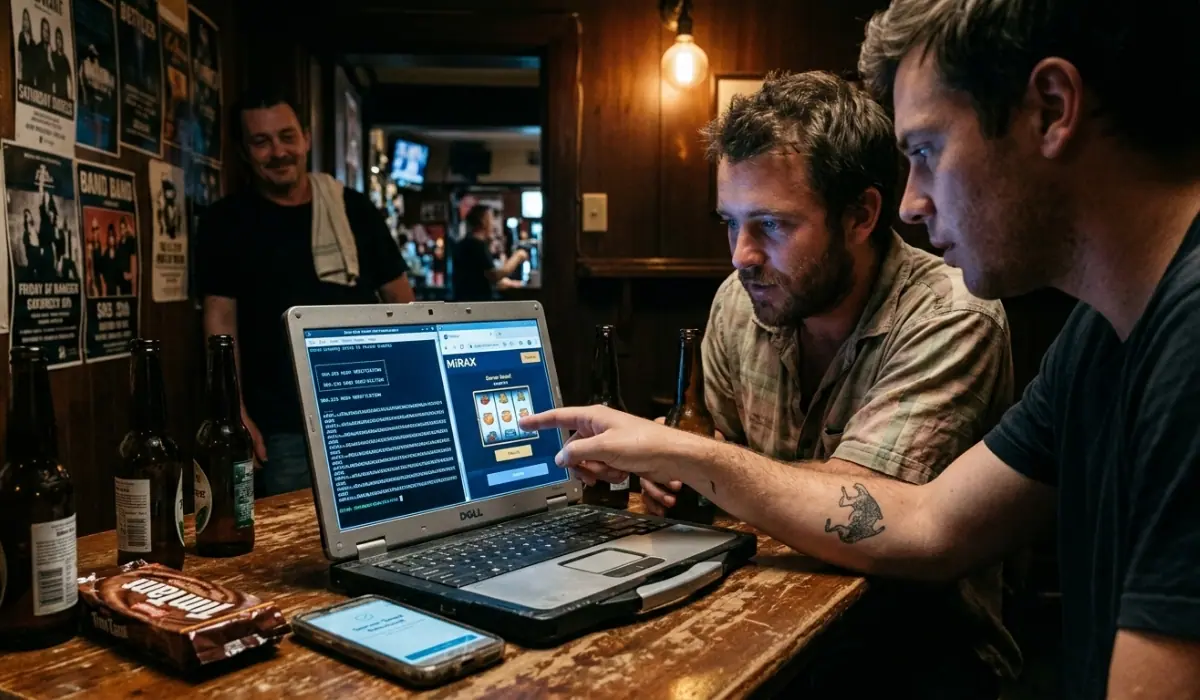
Today, the Australian pokie landscape is dominated by the so-called Digital Giants. Sites like MiRAX, Golden Bet, and Lucky7 host more than 14,000 game titles, which is more than every physical club in 1956 Sydney combined.
AI-Driven RTP: How Modern Software Personalizes Your Punting Experience
Modern pokies have also embraced artificial intelligence. In 2026, casinos are moving from static machines to highly sophisticated software that uses AI-driven RTP adaptation to personalise your punting experience.
It can learn player patterns, such as session length, stake size, and when someone is likely to quit, then recommend rewards, bonuses, or adjust the game settings to match different player styles. This has drastically improved retention rates at digital pokies. Moreover, this level of personalization is impossible for machines with physical gears.
Throughout the history of Australian pokies, trust has also evolved. In the 70s, you had to trust a technician with a key to ensure the machine was fair. But in 2026, that is no longer the case because systems like MiRAX’s Provably Fair technology allow the player to be the auditor. It uses blockchain-based cryptographic hashing, primarily SHA-256– also used to secure Bitcoin- combined with server/client seeds and a nonce to confirm the game’s authenticity.
Understanding SHA-256 Hashing: How Players Audit Their Own Spins
Before each spin, MiRAX generates a random server seed, hashes it with SHA-256 using one-way encryption, and shares that hash publicly.
Then you add your customizable client seed and a nonce, and once the round is over, the casino will reveal the unhashed server seed. To prove that the game was not tampered with, you recompute the hash with all inputs to verify that it matches the exact game outcome. The entire process is trustless and verifiable with proof. Leading developers played a key role in shaping gameplay, with today’s platforms powered by advanced pokie software providers.
Defining The Modern Fair Go: 85% Land Based vs 96% Digital RTP
Even though the word “Fairness” or “Fair-Go” is ingrained in the Australian psyche, its meaning with regards to punting has shifted dramatically over the decades as technology evolved.
Until the 1970s, the standard for game fairness was purely mechanical. A punter’s biggest concern then was hardware reliability. Back then, a fair-go simply meant playing on a Charles Fey Liberty Bell and Aristocrat Clubmaster 1956 that didn’t jam mid-spin and dispensed actual coins into the hopper when you landed a winning combination. It was a tactile and analog experience where trust was placed in the iron gears and the integrity of the local club’s technician.
As mechanical reels started to get replaced by glowing screens in the 1990s, the definition of fairness also evolved – becoming synonymous with software certification.
The Random Number Generator (RNG) was introduced in this period, with players looking for the eCOGRA seal of approval to ensure that the digital reels weren’t weighted or rigged. Fair-go now meant knowing that the game’s mathematics were audited by third parties, providing punters a transparent, but still house-favoured casino experience.
The Liquidity Revolution: Why Instant PayID Withdrawals Are Non Negotiable In 2026
Skip to 2026, and fairness has attained its most transparent and player-centric form yet. Today it’s measured based on immediate liquidity and mathematical edge, meaning you need access to Instant PayID withdrawals and ensure that your winnings have landed in your bank account before you even leave the couch. Today, players can access thousands of titles, including the latest releases featured in new online pokies in Australia.
Fair-go is also determined by playing on pokies with96%+ variable RTP, rather than the tighter margins often found at your local RSL. In the digital era, the punter is no longer just a spectator to the reel math; instead, they are the auditor of their own game.
Older slot machines and early casino mechanics often had lower theoretical RTPs (at 85%) and less transparency than modern digital pokies. Online casinos commonly advertise RTPs in the 94-96% range, with the upper level treated as the “high-RTP benchmark”.